The Ultimate Art & Crafts Supplies Buying Guide: How to Choose the Right Tools for Every Project
Stepping into an art supply store or browsing an online craft catalog can be both exhilarating and overwhelming. With thousands of products ranging from vibrant paints and delicate papers to sculpting clays and intricate textile tools, finding the right materials is an art form in itself. Whether you are a parent looking for safe finger paints, a hobbyist exploring scrapbooking, or an experienced artist upgrading to professional-grade mediums, selecting the right tools directly impacts your creative experience and the longevity of your finished work.
This comprehensive buying guide is designed to demystify the vast world of art and craft supplies. We will break down key categories, explain technical specifications, compare different grades of materials, and provide practical tips to help you make informed purchasing decisions that fit your budget and creative goals.
Understanding Your Crafting Level and Goals
Before diving into specific product categories, it is essential to assess your current skill level and what you hope to achieve. Buying the most expensive professional-grade supplies is not always necessary for beginners, while using low-quality materials can frustrate intermediate crafters looking to advance their skills.
Beginners: Focus on Versatility and Affordability
If you are just starting a new hobby, look for student-grade materials or starter kits. These products are formulated to be user-friendly, forgiving, and cost-effective. Beginner-friendly kits usually contain a curated selection of essential colors or tools, saving you the hassle of buying individual items. Focus on versatile supplies that allow you to experiment with different techniques without a massive financial commitment.
Intermediate Crafters: Upgrading for Better Performance
Once you have mastered the basics, you may find that student-grade supplies limit your progress. For example, student-grade paints contain more fillers and less pigment, making blending more difficult. At this stage, start upgrading your most-used tools to "studio" or "designer" grade. Investing in higher-quality brushes, heavier paper, or more pigment-rich mediums will immediately improve your control and the vibrancy of your work.
Advanced Artists: Investing in Professional-Grade Materials
Professional or artist-grade supplies are formulated with the highest concentration of pure pigments, premium binders, and archival materials. These products are designed to resist fading over decades (lightfastness) and withstand heavy manipulation. While they carry a premium price tag, professional tools offer unmatched performance, consistency, and durability. Advanced creators should focus on purchasing individual "open-stock" items tailored to their specific techniques rather than pre-packaged sets.
Essential Art & Craft Categories: What to Look For
To help you navigate the market, let us explore the most popular categories within the art and crafts niche and the critical factors to evaluate when shopping for each.
1. Fine Art Mediums: Paints, Pencils, and Pastels
Choosing a painting or drawing medium depends on your preferred working style, drying time, and cleanup preferences.
- Acrylic Paint: Acrylics are incredibly versatile, water-soluble when wet, and dry quickly to a water-resistant finish. When buying acrylics, consider viscosity. Heavy-body acrylics have a thick, buttery consistency ideal for textured palette knife work. Soft-body or fluid acrylics are thinner, making them perfect for smooth glazing, detailed illustration, or pouring techniques.
- Watercolor Paint: Watercolors are celebrated for their transparency and luminous qualities. They are available in pans (dry cakes that activate with water) and tubes (moist paint). Pans are highly portable and excellent for travel sketching, while tubes make it easier to mix large washes of color. Look for transparency ratings on the label, as watercolors range from transparent to semi-opaque.
- Oil Paint: Known for their rich, slow-drying properties, oils allow for exquisite blending over days or even weeks. Traditional oils require chemical solvents like mineral spirits for cleanup. If you work in a small home studio without ventilation, look for water-mixable oil paints, which can be thinned and cleaned up with plain water.
- Drawing Mediums: When buying graphite pencils, pay attention to the hardness scale. "H" pencils (9H to F) have harder lead and produce light, precise lines suitable for technical drafting. "B" pencils (HB to 9B) have softer lead, producing dark, smudgeable lines perfect for expressive shading. For colored pencils, choose between wax-based (easy to blend but prone to "wax bloom" haze) and oil-based (harder, holds a sharp point, and highly durable).
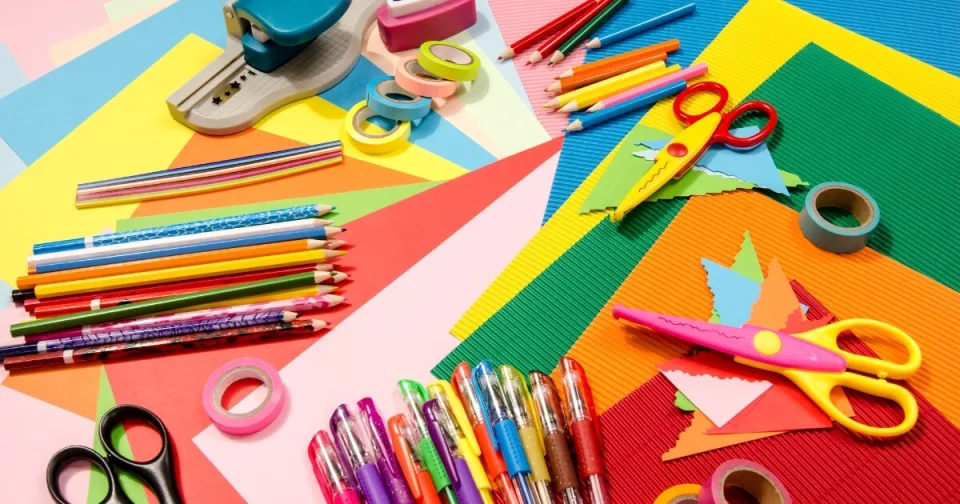
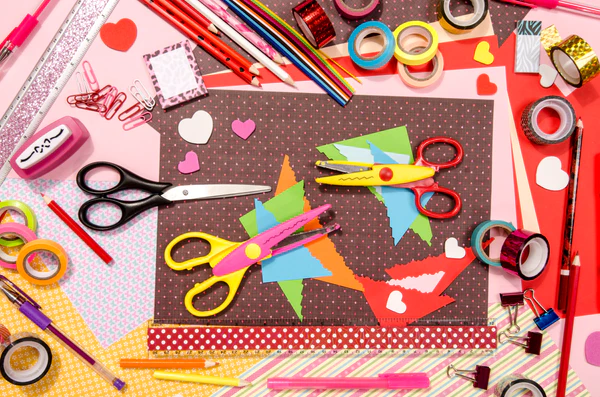
2. Paper Crafts, Journaling, and Scrapbooking
The foundation of any paper craft is the paper itself. Choosing the wrong weight or composition can lead to warping, tearing, or yellowing over time.
The most critical specification to check is paper weight, measured in GSM (Grams per Square Meter) or pounds (lbs):
- 60 to 90 GSM: Standard sketch paper, tracing paper, or printer paper. Best for quick pencil studies, but will warp with ink or paint.
- 120 to 150 GSM: Heavyweight drawing paper or light cardstock. Suitable for dry mediums, pens, and light marker work.
- 200 to 300 GSM: Heavy cardstock, mixed-media paper, and standard watercolor paper. Essential for wet mediums, collage, and structural paper crafting.
Additionally, always look for the terms "Acid-Free" and "Lignin-Free" when buying paper and adhesives for scrapbooking or archiving. Acid and lignin cause paper to turn yellow, brittle, and degrade over time, which can ruin precious photos and keepsake documents.
3. Sculpting, Clay, and 3D Crafts
Working in three dimensions requires materials that can hold their shape, accept fine detail, and cure properly in a home environment.
- Polymer Clay: A favorite for jewelry making, miniature sculpting, and home decor. Polymer clay remains soft until baked in a standard home oven. When buying, look for flexibility after baking; high-quality polymer clays should remain slightly bendable rather than brittle when cured in thin sections.
- Air-Dry Clay: This clay cures at room temperature without the need for an oven or kiln. It is highly accessible for beginners and children, though it shrinks slightly as it dries and is more prone to cracking than polymer clay. It must be sealed with a varnish to protect it from moisture.
- Epoxy Clay: A two-part clay (resin and hardener) that cures chemically at room temperature. Once cured, it is incredibly strong, waterproof, and can be sanded, drilled, or painted. It is ideal for structural repairs and heavy-duty sculpting.
4. Textile, Fiber, and Needle Crafts
Fiber arts encompass knitting, crocheting, embroidery, and weaving. The quality of your raw fibers determines the texture, drape, and durability of your creation.
- Yarn Selection: Yarn is classified by weight (from 0-Lace to 7-Jumbo) and fiber content. Natural fibers like wool, alpaca, and cotton offer excellent breathability and structure but require gentle hand-washing. Synthetic fibers like acrylic are budget-friendly, machine-washable, and highly durable, making them excellent for blankets and children's garments.
- Embroidery Floss and Fabric: For hand embroidery and cross-stitch, six-strand cotton floss is the industry standard. Look for mercerized cotton, which has a beautiful sheen and resists tangling. When choosing embroidery fabric, beginners should start with Aida cloth (which has a clear, open grid), while advanced stitchers may prefer the smooth look of evenweave linen.
Crucial Technical Factors to Evaluate Before Purchasing
To ensure you get the best value and performance from your art and craft supplies, look beyond the colorful packaging and analyze these technical specifications:
Pigment Load and Binder Quality
Paint consists of two primary ingredients: pigment (the color powder) and a binder (the glue that holds the pigment together and sticks it to the surface). Cheap paints use synthetic dyes and heavy fillers (like chalk or barium sulfate) to bulk up the product. Professional paints feature high pigment loads and pure binders, resulting in richer colors that cover surfaces with fewer coats and blend without turning muddy.
Lightfastness Ratings
Lightfastness refers to a product's resistance to fading when exposed to light over time. If you plan to sell your artwork or display it in a sunny room, lightfastness is critical. Look for the American Society for Testing and Materials (ASTM) rating on the packaging:
- ASTM I (Excellent Lightfastness): Will not fade for over 100 years under gallery lighting.
- ASTM II (Very Good Lightfastness): Will remain stable for 50 to 100 years.
- ASTM III (Fair/Poor Lightfastness): Will fade quickly; suitable only for temporary work or sketchbooks.
Safety Standards and Toxicity
Many traditional art supplies contain hazardous materials, such as heavy metals (cadmium, cobalt, lead) in paint pigments, or volatile organic compounds (VOCs) in solvents and varnishes. When buying supplies, especially for children, schools, or home studios with limited ventilation, check for safety certifications:
- AP (Approved Product) Seal: Certified non-toxic by the Art and Creative Materials Institute (ACMI). Safe for users of all ages.
- CL (Cautionary Labeling) Seal: Indicates the product contains ingredients that require safe handling precautions (e.g., wearing gloves or working in a ventilated space).
Art Mediums Comparison Matrix
The table below provides a quick-reference comparison of popular art and craft mediums to help you decide which is best suited for your next project, budget, and space constraints.
| Medium | Skill Level | Primary Surface | Drying/Curing Time | Cleanup Method | Price Range |
|---|---|---|---|---|---|
| Acrylic Paint | Beginner to Professional | Canvas, Wood, Paper, Fabric | Very Fast (10–30 minutes) | Water & Soap | Low to Moderate |
| Watercolor Paint | Beginner to Professional | Heavy Watercolor Paper | Fast (5–15 minutes) | Water | Moderate to High |
| Oil Paint | Intermediate to Professional | Primed Canvas, Wood Panels | Very Slow (Days to Weeks) | Solvents or Oils | Moderate to High |
| Polymer Clay | Beginner to Advanced | N/A (Sculptural) | Requires Oven Baking | Soap & Water (for hands) | Low to Moderate |
| Colored Pencils | Beginner to Professional | Drawing Paper, Bristol Board | Instant (Dry Medium) | None | Low to High |
| Yarn & Fiber Arts | Beginner to Advanced | N/A (Structural/Wearable) | Instant (Dry Craft) | None | Low to High |
Smart Shopping Tips for Art & Craft Enthusiasts
Building a high-quality collection of craft supplies does not have to break the bank. Use these strategic shopping tips to maximize your budget:
1. Buy "Open-Stock" for Core Colors and Tools
While buying a set of 48 colored pencils or acrylic paints is tempting, you will likely use certain colors (like titanium white, black, or ultramarine blue) much faster than others. Buying "open-stock" (individual items sold separately) allows you to replace only the colors you use most. It also lets you try premium brands by purchasing just one or two pencils or tubes before committing to a full set.
2. Understand "Student" vs. "Artist" Grade Labeling
Manufacturers use different naming conventions to distinguish their product tiers. If a product label contains words like "Academy," "Studio," "Student," or "Craft," it is designed for beginners and budget-conscious creators. If it says "Professional," "Artist," or "Extra-Fine," it is a premium product with maximum pigment concentration and archival quality. Choose your grade based on the importance of the project.
3. Test Your Brushes In-Store (or Read Reviews Carefully)
A high-quality brush is one of the most important investments you can make. When buying paintbrushes, look for "spring"—the bristles should snap back into shape immediately after being bent. The ferrule (the metal band holding the bristles to the handle) should be seamless and securely attached; a loose ferrule will cause the brush to shed hairs onto your artwork, which is incredibly frustrating to clean up mid-painting.
4. Prioritize Storage and Organization
Art supplies are sensitive to environmental factors. Direct sunlight can fade markers and dry out polymer clay, while humidity can warp fine papers and rust metal sculpting tools. When budgeting for supplies, allocate a portion of your funds to proper storage solutions, such as airtight plastic bins, acid-free storage boxes for paper, and brush organizers that allow brushes to dry flat or upside down to prevent water from rotting the wooden handles.
Conclusion
Choosing the right art and craft supplies is a deeply personal journey that evolves alongside your creative skills. By understanding your current goals, paying attention to key technical specifications like paper weight and lightfastness, and investing strategically in high-quality core tools, you will set yourself up for a much more rewarding creative process. Remember, the best tools are not necessarily the most expensive ones; they are the ones that behave predictably, respect your budget, and help you bring your unique artistic vision to life with ease and joy.