The Ultimate Buying Guide to Fine Jewelry and Luxury Watches: How to Choose Timeless Pieces
Investing in fine jewelry and luxury watches is more than a simple retail transaction; it is an acquisition of artistry, history, and personal expression. Whether you are celebrating a milestone, searching for a legacy heirloom, or building a curated collection, navigating the vast world of horology and gemology can be both exciting and overwhelming. With countless options in precious metals, gemstone grades, and mechanical movements, making an informed decision requires a solid foundation of knowledge.
This comprehensive buying guide is designed to demystify the essential elements of jewelry and watches. By understanding the core materials, craftsmanship techniques, and quality standards, you will gain the confidence to select pieces that offer lasting beauty, structural integrity, and enduring value.
---Understanding Precious Metals: The Foundation of Jewelry and Watches
The metal you choose forms the structural and aesthetic foundation of any jewelry piece or timepiece. It dictates not only the item's appearance but also its durability, weight, hypoallergenic properties, and maintenance requirements.
Gold: Karats, Colors, and Durability
Gold has been the universal symbol of wealth and beauty for millennia. In its pure form (24-karat), gold is incredibly soft and malleable, making it impractical for everyday wear. To enhance its strength, artisans alloy pure gold with other metals such as copper, silver, zinc, and nickel.
- Karats (K): The karat rating measures the purity of gold out of 24 parts. 18K gold contains 75% pure gold and is highly prized for fine jewelry due to its rich color and prestigious status. 14K gold contains 58.3% pure gold, offering an ideal balance of rich tone, excellent durability, and affordability, making it the most popular choice for engagement rings and daily wear. 10K gold contains 41.7% pure gold and is exceptionally durable but has a paler yellow hue.
- Yellow Gold: Created by mixing pure gold with silver and copper. It offers a classic, warm glow that does not tarnish and complements warm skin tones beautifully.
- White Gold: Achieved by alloying gold with white metals like palladium or nickel. It is typically plated with rhodium—a rare metal from the platinum family—to give it a brilliant, reflective white mirror finish. Over time, this rhodium plating may wear off, requiring a simple re-plating process to restore its luster.
- Rose Gold: Formed by blending pure gold with a higher percentage of copper. This creates a romantic, vintage-inspired pinkish hue that is highly durable and suits all skin tones.
Platinum: The Ultimate Noble Metal
Platinum is a dense, heavy, and naturally white precious metal. Usually used in a 90% to 95% pure state, it is hypoallergenic, making it excellent for individuals with sensitive skin. Unlike white gold, platinum does not require rhodium plating to maintain its color. As it wears, platinum develops a soft, satin-like finish known as a patina, which many collectors admire. It is highly secure for holding precious gemstones because it bends under impact rather than breaking.
Sterling Silver: Elegant and Accessible
Sterling silver is an alloy containing 92.5% pure silver and 7.5% other metals, usually copper. Marked with a "925" stamp, sterling silver is beloved for its bright metallic luster and affordability. While it is softer than gold and platinum—making it prone to scratching and tarnishing when exposed to air and moisture—regular polishing and proper storage can keep it looking pristine for generations.
Alternative Metals in Modern Watchmaking and Jewelry
Modern horology and contemporary jewelry design have embraced non-traditional metals that offer unique technical advantages:
- Titanium: Renowned for its incredible strength-to-weight ratio, titanium is biocompatible, hypoallergenic, and highly resistant to corrosion. It is a favored material for sports watches and lightweight wedding bands.
- Ceramic: Highly scratch-resistant and lightweight, high-tech ceramic is widely used in modern watch bezels and cases. It retains its color permanently and does not fade under UV light.
- Bronze: Frequently used in marine-inspired dive watches, bronze oxidizes over time, developing a unique, rugged patina based on the wearer's lifestyle and environment.
Precious Metals Comparison Table
To help you weigh your options, the table below summarizes the key characteristics of the most common metals used in jewelry and watches:
| Metal Type | Purity Standard | Durability | Hypoallergenic | Maintenance Level | Best Suited For |
|---|---|---|---|---|---|
| 18K Yellow Gold | 75% Gold | Moderate | High | Low (Occasional polishing) | Fine jewelry, heirloom pieces |
| 14K White Gold | 58.3% Gold | High | Moderate (May contain nickel) | Medium (Requires periodic rhodium plating) | Engagement rings, everyday jewelry |
| Platinum | 90% - 95% Platinum | Very High (Scratches but does not lose metal) | Excellent (100% Hypoallergenic) | Low (Polishing optional for patina) | Bridal settings, luxury watch cases |
| Sterling Silver | 92.5% Silver | Low to Moderate | High | High (Prone to tarnish, needs regular cleaning) | Fashion jewelry, statement pieces |
| Titanium | Commercial Pure / Grade 5 | Extremely High | Excellent | Very Low | Sports watches, modern men's bands |
Demystifying Gemstones: The 4Cs and Beyond
Gemstones bring color, brilliance, and individuality to jewelry. Whether you are purchasing a classic diamond solitaire or a vibrant colored gemstone ring, understanding how these stones are graded is vital to securing a fair value.
Diamonds: The Universal Standard of Brilliance
Established by the Gemological Institute of America (GIA), the "4Cs" are the globally accepted standard for assessing diamond quality. Every buyer should understand how these factors interact to determine a diamond’s beauty and price:
- Cut: Often considered the most important of the 4Cs, the cut refers to how well a diamond’s facets interact with light. A masterfully cut diamond maximizes light return, creating exceptional brightness (brilliance), fire (dispersion of light into rainbow colors), and scintillation (sparkle). Cut grades range from Excellent to Poor.
- Color: White or colorless diamonds are graded on a scale from D (absolutely colorless) to Z (light yellow or brown). Colorless diamonds (D-F) are the rarest and most expensive. However, near-colorless diamonds (G-J) offer incredible value, as they appear face-up as white to the untrained eye while costing significantly less.
- Clarity: This measures the purity of the diamond by evaluating its internal characteristics (inclusions) and surface blemishes (blemishes). The scale runs from Flawless (FL) to Included (I1-I3). For the best value, look for "Eye-Clean" diamonds in the VS1-VS2 (Very Slightly Included) or SI1 (Slightly Included) ranges, where imperfections are invisible without magnification.
- Carat Weight: This measures the physical weight of the diamond (1 carat = 200 milligrams). While carat weight correlates with size, two diamonds of equal carat weight can look different in size depending on their cut proportions. To save money, consider buying just below major weight thresholds (e.g., a 0.90-carat diamond instead of a full 1.00-carat stone).
Colored Gemstones: Sapphires, Rubies, and Emeralds
While the 4Cs apply to colored gemstones, the primary driver of value for colored stones is color intensity. Color is evaluated based on three dimensions:
- Hue: The basic body color of the stone (e.g., blue, green, red).
- Tone: The relative lightness or darkness of the color.
- Saturation: The strength, purity, or intensity of the color. The most valuable stones exhibit vivid, highly saturated colors without being overly dark.
The "Big Three" colored gemstones remain highly sought after:
- Sapphires: Famous for their deep cornflower blue, sapphires are highly durable (9 on the Mohs hardness scale), making them excellent for daily wear. They also occur in fancy colors, including pink, yellow, and green.
- Rubies: A red variety of the mineral corundum, the most prized rubies exhibit a deep, pure red hue with a hint of blue, historically referred to as "pigeon's blood."
- Emeralds: Famous for their lush green hues, emeralds naturally contain internal fractures and inclusions, often called the "jardin" (garden). Because they are more brittle (7.5 to 8 on the Mohs scale), they require gentle wear and care.
Pearls: Nature's Organic Treasures
Unlike minerals mined from the earth, pearls are organic gems formed inside mollusks. When buying pearls, pay close attention to:
- Luster: The intensity and sharpness of light reflected from the pearl’s surface. High luster produces sharp, bright reflections.
- Nacre Thickness: The layers of calcium carbonate that make up the pearl. Thicker nacre ensures greater durability and a deeper glow.
- Types of Pearls: Choose between affordable, diverse Freshwater pearls; classic, highly lustrous Japanese Akoya pearls; large, luxurious South Sea pearls; and exotic, dark-hued Tahitian pearls.
The Ultimate Guide to Luxury Watches: Movements, Styles, and Complications
A fine timepiece is a blend of micro-engineering, artistic design, and heritage. Choosing the right watch requires an understanding of what powers the watch, its intended environment, and the additional features it offers.
Watch Movements: The Heart of the Timepiece
The movement, or caliber, is the internal mechanism that drives the watch hands and powers any additional functions. Movements fall into three primary categories:
1. Mechanical (Manual-Wind)
The traditionalist's choice. These watches require the wearer to manually turn the crown to wind an internal mainspring, which slowly releases energy to power the gears. Mechanical watches are admired for their tactile connection to the wearer and the visible, intricate choreography of their gear trains through exhibition casebacks.
2. Automatic (Self-Winding)
An evolution of the mechanical watch. Automatic watches feature an internal weighted rotor that spins with the natural motion of the wearer’s wrist, automatically winding the mainspring. If worn daily, an automatic watch will run indefinitely without manual winding. If left unworn, it will run down after its power reserve (typically 38 to 72 hours) is depleted.
3. Quartz
Powered by a battery that sends an electrical current through a tiny synthetic quartz crystal, causing it to vibrate at an incredibly stable frequency. Quartz watches are highly accurate, low-maintenance, and cost-effective. While they lack the romantic craftsmanship of mechanical movements, their precision and reliability are unmatched.
Essential Watch Styles
A well-rounded watch collection typically features different styles suited for specific dress codes and activities:
- The Dress Watch: Elegant, minimalist, and ultra-thin. Designed to slip easily under a shirt cuff, dress watches typically feature precious metal cases, clean dials, and leather straps. They focus purely on timekeeping without unnecessary distractions.
- The Dive Watch: Engineered for rugged durability and underwater exploration. Dive watches feature high water resistance (typically 200m or more), highly legible luminous hands and markers, and a unidirectional rotating bezel used to track elapsed dive time.
- The Chronograph: Essentially a stopwatch built into a wristwatch. Identifiable by its sub-dials and side pushers, the chronograph is rooted in motorsports and aviation, offering a sporty, technical aesthetic.
- The GMT / Dual-Time Watch: Designed for travelers, these watches feature an extra hour hand and a 24-hour bezel, allowing the wearer to track two or more time zones simultaneously.
Understanding Watch Complications
In horology, a "complication" is any function on a watch that goes beyond displaying the hours, minutes, and seconds. Common and prestigious complications include:
- Date/Day-Date: The simplest and most practical daily complication, showing the current date and day of the week.
- Moonphase: A poetic complication that tracks the current phase of the moon across the lunar cycle, displayed through an artistic dial aperture.
- Annual and Perpetual Calendars: Highly sophisticated mechanisms. An annual calendar automatically adjusts for months with 30 or 31 days, requiring adjustment only once a year in February. A perpetual calendar accounts for leap years and short months, requiring no manual adjustment until the year 2100.
- Tourbillon: A highly complex mechanism where the escapement and balance wheel are housed in a rotating cage to negate the effects of gravity on the watch's accuracy. It is highly coveted as a showcase of master-level watchmaking.
How to Choose the Right Fit and Proportion
Even the most beautiful piece of jewelry or watch will remain unworn if it is uncomfortable or disproportionate to your body. Getting the fit right is a crucial, yet often overlooked, step in the buying process.
Finding the Perfect Ring Size and Necklace Length
When buying rings, remember that fingers swell and shrink depending on temperature, time of day, and physical activity. Measure your finger at the end of the day when it is warmest. For wide bands, it is often wise to go up a half-size for a comfortable fit.
For necklaces, the length dictates where the pendant or chain rests on your chest. Standard lengths include:
- 16 inches (Choker length): Rests just above the collarbone; ideal for scoop necks and crew necks.
- 18 inches (Princess length): Rests on the collarbone; the most versatile length for everyday pendants.
- 20 to 22 inches (Matinee length): Rests below the collarbone; perfect for layering or wearing over clothing.
Determining Watch Case Size and Wrist Proportion
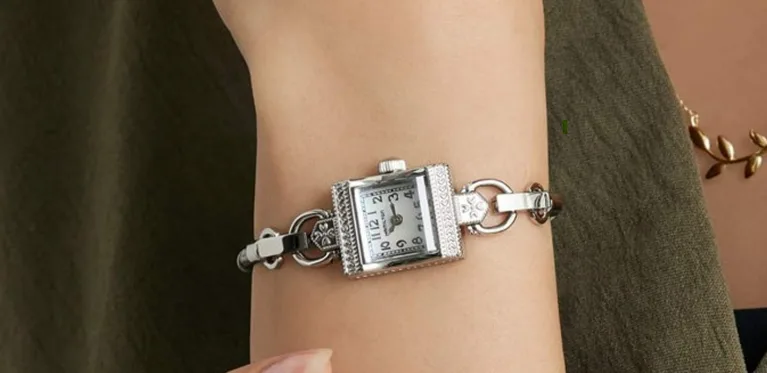
A watch should sit comfortably on the flat part of your wrist without its lugs (the metal horns where the strap attaches) overhanging the edges of your arm. Consider these general guidelines:
- Wrist circumference under 6 inches (15cm): Best suited for case diameters ranging from 28mm to 36mm.
- Wrist circumference of 6 to 7 inches (15cm - 18cm): The sweet spot for mid-sized watches, typically 36mm to 40mm.
- Wrist circumference over 7.5 inches (19cm+): Can comfortably accommodate larger, bolder sports watches from 42mm to 46mm.
- Case Thickness: A watch's thickness should match its style. Dress watches should ideally be under 10mm thick, while robust mechanical chronographs or dive watches can range from 13mm to 16mm.
Smart Buying Strategies: Authenticity, Certification, and Care
Protecting your investment involves verifying the authenticity of your purchase and committing to proper long-term maintenance.
Demanding Certification
When purchasing significant gemstone jewelry, always ask for an independent laboratory grading report. Reputable organizations like the GIA (Gemological Institute of America), AGS (American Gem Society), or HRD Antwerp provide unbiased assessments of a stone’s characteristics. These certificates guarantee that the diamond or colored gemstone is natural, ethically sourced, and matches the seller's claims.
For luxury watches, ensure the timepiece comes with its original box, warranty card, and instruction manual (often referred to as "box and papers"). For high-end mechanical watches, look for chronometer certifications such as COSC (Contrôle Officiel Suisse des Chronomètres), which certifies that the movement has passed rigorous precision tests under various temperatures and positions.
Maintenance and Long-Term Care Tips
To preserve the beauty and functionality of your collection, implement a careful maintenance routine:
- Storage: Store jewelry pieces individually in soft cloth pouches or lined compartments to prevent them from scratching one another. Diamonds, being the hardest mineral, can easily scratch gold, silver, and other gemstones.
- Cleaning: Clean most fine jewelry at home using warm water, a few drops of mild dish soap, and a very soft-bristled toothbrush. Avoid harsh chemicals like bleach or ammonia, especially on organic gems like pearls and opals.
- Watch Servicing: Mechanical watches are intricate machines with moving parts lubricated by specialized oils. Over time, these oils dry out. Plan to have your mechanical watches professionally serviced every 5 to 8 years to clean the movement, replace worn parts, and renew water-resistance seals.
- Water Resistance: Never pull out the crown of a watch while it is wet or submerged. If your watch has a screw-down crown, ensure it is fully secured before exposing it to water. Have the water-resistance seals pressure-tested annually if you swim or dive with your watch.
Conclusion: Selecting Pieces That Tell Your Story
Acquiring fine jewelry and luxury watches is a deeply personal journey. While technical specifications, metal purities, and gemstone grades provide a crucial framework for evaluating quality, the ultimate test of any piece is how it makes you feel. A perfect piece of jewelry or a fine watch should resonate with your personal style, feel comfortable on your skin, and bring a sense of joy and pride whenever you wear it.
By prioritizing quality materials, demanding proper certification, and choosing classic designs that transcend passing fashion trends, you ensure that your collection will not only retain its beauty and value today but will continue to tell your unique story for generations to come.