Free Weights vs. Machines: Which Is Better for Your Fitness Goals?
The age-old debate in the fitness world—free weights versus machines—has divided gym-goers for decades. Whether you are a beginner stepping into a gym for the first time or an experienced athlete looking to optimize your routine, choosing the right equipment is crucial. Both modalities offer unique advantages, and the "better" option often depends on your specific goals, experience level, and physical condition.
In this guide, we will break down the mechanics, benefits, and drawbacks of both free weights and machines to help you design a workout program that maximizes your results while minimizing the risk of injury.
Understanding Free Weights: The Foundation of Functional Strength
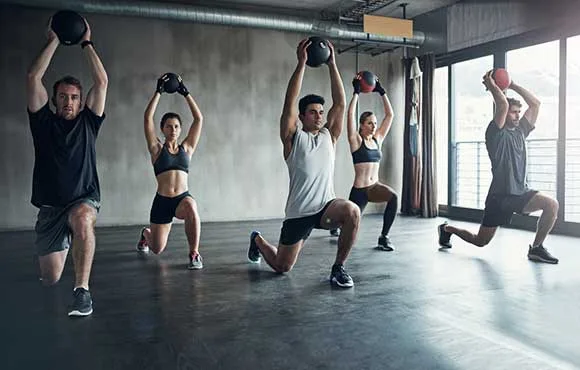
Free weights include equipment that is not attached to a machine or cable system. This category primarily features dumbbells, barbells, kettlebells, and medicine balls. The defining characteristic of free weights is that they require the user to manage the weight through a full range of motion, requiring significant stabilization from smaller, supporting muscle groups.
The Benefits of Free Weights
- Increased Muscle Activation: Because you must balance the weight yourself, free weights recruit more stabilizer muscles compared to machines. This leads to greater overall muscle recruitment and coordination.
- Functional Movement Patterns: Exercises like squats, deadlifts, and overhead presses mimic movements we perform in daily life, improving functional strength and mobility.
- Versatility: A single pair of dumbbells can be used for dozens of exercises, making them ideal for home gyms or crowded fitness centers where machine access is limited.
- Range of Motion: Free weights allow you to move in a natural plane of motion that fits your specific body mechanics, rather than being forced into the fixed path of a machine.
The Challenges of Free Weights
The primary downside of free weights is the steeper learning curve. Proper form is essential to prevent injury, and because there is no mechanical guide, beginners may struggle to execute movements correctly without professional instruction. Additionally, free weights can be more dangerous if you reach muscle failure without a spotter, particularly with exercises like the bench press.
Understanding Fitness Machines: Precision and Isolation
Gym machines, such as leg presses, cable rows, and Smith machines, are designed to guide the body through a fixed path of motion. These pieces of equipment are highly popular in commercial gyms because they allow for controlled movement and easy adjustments.
The Benefits of Machines
- Safety and Stability: Machines provide external stability, which is excellent for beginners who are still learning movement patterns or for those recovering from an injury.
- Ease of Use: Most machines come with instructional diagrams. They are intuitive, making them less intimidating for those new to strength training.
- Targeted Isolation: Machines are superior for isolating specific muscle groups. If your goal is bodybuilding and you want to target the quadriceps specifically without involving the lower back or core, a leg extension machine is highly effective.
- Time Efficiency: Changing the weight on a machine usually takes seconds—often just moving a pin—which makes drop sets and high-intensity interval training easier to execute.
The Challenges of Machines
The main limitation of machines is that they do not account for individual body proportions. A fixed path of motion might feel awkward for someone with long limbs or specific joint issues. Furthermore, because the machine handles the stabilization for you, you may miss out on developing the core strength and secondary stabilizer muscles that come with free-weight training.
Head-to-Head Comparison: A Quick Overview
| Feature | Free Weights | Machines |
|---|---|---|
| Stabilizer Muscles | High activation | Low activation |
| Learning Curve | Steep | Low |
| Safety | Requires technique/spotter | High (fixed path) |
| Muscle Isolation | Moderate | High |
| Functional Carryover | High | Low |
| Equipment Cost | Affordable | Expensive |
How to Choose Based on Your Fitness Goals
Your choice between free weights and machines should be dictated by what you are trying to achieve. Here is how to navigate your decision:
For Beginners
If you are new to the gym, start with a combination of both. Use machines to get comfortable with the sensation of lifting and to build a base level of strength. As you gain confidence, incorporate basic free-weight movements (like goblet squats or dumbbell presses) under the guidance of a trainer to develop the necessary motor skills and stabilizer strength.
For Bodybuilding and Hypertrophy
Bodybuilders often use both. Free weights are the gold standard for building overall mass and density through compound movements. However, machines are indispensable for "finishing" a muscle group—using isolation exercises at the end of a workout to push a muscle to complete fatigue without the risk of failing on a heavy barbell lift.
For Athletic Performance
Athletes should prioritize free weights. Sports require movement in multiple planes and rely heavily on core stability and balance. Free-weight training prepares the body for the unpredictable nature of athletic competition far better than the linear, controlled paths of most machines.
For Rehabilitation
If you are recovering from an injury, machines are often the safest starting point. They allow you to work around a specific joint injury by limiting the range of motion or removing the need for stabilization, allowing you to maintain muscle mass while you heal.
The Hybrid Approach: The Golden Rule of Fitness
The most effective fitness programs rarely rely exclusively on one method. The "hybrid approach" is widely considered the gold standard in modern exercise science. By combining the compound, functional benefits of free weights with the targeted, safe, and efficient nature of machines, you can create a balanced physique that is both strong and injury-resistant.
Sample Hybrid Routine Structure:
- Warm-up: Mobility work and light cardio.
- Primary Compound Movement (Free Weights): Barbell squats or deadlifts to build overall strength.
- Secondary Compound Movement (Free Weights/Machines): Dumbbell presses or a chest press machine to build upper body mass.
- Isolation Exercises (Machines): Leg extensions, cable flyes, or machine rows to fatigue specific muscle groups.
- Cool-down: Static stretching and recovery.
Final Thoughts: Consistency Trumps Equipment
While the debate between free weights and machines is interesting, it is important to remember that the most effective tool in your fitness journey is consistency. Whether you prefer the raw, challenging nature of a barbell or the smooth, controlled environment of a cable machine, the key to progress is progressive overload—gradually increasing the intensity, volume, or weight over time.
If you have access to both, use both. Use free weights to build the foundation of your strength and machines to polish your physique and safely push your limits. By understanding the unique benefits of each, you can move away from "either-or" thinking and toward a comprehensive fitness strategy that helps you reach your goals faster and more sustainably.
Always prioritize form over weight. Regardless of the equipment, poor technique is the fastest way to derail your progress. Listen to your body, track your workouts, and don't be afraid to experiment with new exercises to keep your training engaging and effective.