Free Weights vs. Machines: Which Is Better for Your Fitness Goals?
When you walk into a gym, the layout is typically divided into two distinct zones: the free weight area, dominated by dumbbells, barbells, and kettlebells, and the machine circuit, featuring sleek, cable-driven equipment. For fitness enthusiasts—whether you are a beginner looking to lose weight or an experienced lifter aiming for hypertrophy—the debate between free weights and machines is constant. Understanding the nuances of each is essential for designing a workout routine that is both effective and sustainable.
In this guide, we will break down the differences, pros, and cons of both modalities to help you determine which approach best aligns with your personal fitness journey.
Understanding Free Weights: The Foundation of Functional Strength
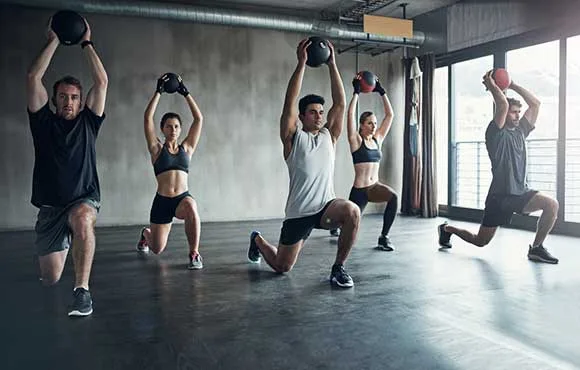
Free weights include any equipment that is not attached to a pulley or a fixed track. This category encompasses dumbbells, barbells, kettlebells, medicine balls, and plate-loaded equipment. The defining characteristic of free weights is that the user must control the path of the weight in all three planes of motion.
The Benefits of Free Weights
- Increased Muscle Activation: Because you must stabilize the weight yourself, you engage secondary muscles and stabilizers that machines often bypass.
- Functional Movement Patterns: Free weight exercises, such as squats and deadlifts, mimic real-world movements, improving your coordination and balance.
- Versatility: A single pair of dumbbells can be used for dozens of exercises, making them an incredibly efficient tool for home gyms or crowded fitness centers.
- Range of Motion: You are not restricted by the mechanical path of a machine, allowing you to tailor movements to your specific body mechanics.
The Challenges of Free Weights
The primary drawback of free weights is the steeper learning curve. Proper form is paramount to avoid injury. Because there is no mechanical guide, beginners may struggle to maintain stability, which can lead to improper technique under heavy loads. Additionally, they require a higher degree of mental focus to control the eccentric (lowering) phase of the lift.
Understanding Fitness Machines: Precision and Isolation
Fitness machines, or selectorized equipment, are designed to move along a fixed path. Whether it is a leg press, a chest press machine, or a cable lat pulldown, these tools are engineered to isolate specific muscle groups by removing the need for stabilization.
The Benefits of Machines
- Ease of Use: Machines are intuitive. For someone new to fitness, the visual instructions on the equipment provide a clear path to execution.
- Safety: Because the weight is on a fixed track, there is a lower risk of dropping a weight on yourself or losing control during a set.
- Isolation: If your goal is to target a specific muscle—for example, the quadriceps or the pectorals—machines allow you to push to failure without the stabilizer muscles giving out first.
- Time Efficiency: Changing the weight is as simple as moving a pin. This makes machines ideal for techniques like drop sets or circuit training.
The Challenges of Machines
The main limitation of machines is their lack of functional transfer. Since the machine does the stabilizing for you, your core and secondary muscles may not be challenged to the same extent as they would be with free weights. Furthermore, machines are built for the "average" body; if you are significantly taller or shorter than the design standard, you may find the ergonomics uncomfortable or even injury-prone.
Comparative Analysis: Free Weights vs. Machines
To help you decide which equipment should dominate your routine, we have summarized the key differences in the table below.
| Feature | Free Weights | Fitness Machines |
|---|---|---|
| Learning Curve | High (Requires coaching) | Low (Intuitive) |
| Muscle Activation | High (Stabilizers engaged) | Moderate (Isolation focus) |
| Safety Risk | Higher (Requires spotter) | Lower (Fixed path) |
| Functional Transfer | High (Real-world movement) | Low (Specific muscle focus) |
| Space/Equipment | Compact and versatile | Bulky and specialized |
Choosing the Right Tool for Your Goal
Your choice between free weights and machines should be dictated by your specific training objectives. There is no rule stating you must choose one over the other; in fact, the most successful training programs often integrate both.
If Your Goal is Hypertrophy (Muscle Growth)
Bodybuilders often use a hybrid approach. They utilize free weights for compound movements—like the barbell squat or overhead press—to stimulate maximum muscle fiber recruitment. They then finish their workouts with machines to isolate specific muscles and achieve "time under tension" without the risk of form breakdown due to fatigue.
If Your Goal is Functional Strength and Fat Loss
If you are looking to improve your daily movement quality or burn more calories, free weights should be your priority. The energy expenditure required to stabilize a heavy dumbbell during a lunge is significantly higher than sitting on a leg extension machine. Focus on compound, multi-joint movements to maximize metabolic impact.
If You Are Recovering from Injury
Machines are often superior during the rehabilitation phase. When a joint is compromised, the stability provided by a machine can allow you to continue training the surrounding muscle tissue without putting undue stress on the injured area. Always consult with a physical therapist before choosing equipment post-injury.
The Verdict: A Hybrid Approach is Best
For the vast majority of the population, the best fitness routine is not a choice between free weights and machines, but a strategic combination of both.
A well-rounded workout structure might look like this:
- The Compound Foundation: Start your workout with free weights. This is when your central nervous system is freshest and you can handle the complexity of compound movements like deadlifts or rows.
- The Isolation Phase: Use machines in the second half of your workout. When your stabilizer muscles begin to tire, machines allow you to safely push your primary muscles to exhaustion.
- The Ergonomic Check: Always adjust machines to your height. If a machine feels "off" or causes joint pain, do not force it. Stick to free weights or find a machine that fits your body proportions better.
Final Considerations for Your Fitness Journey
Regardless of the equipment you choose, consistency and progressive overload remain the golden rules of fitness. Whether you are lifting a 50lb dumbbell or pinning a 50lb stack on a machine, your body will adapt to the stimulus if you consistently increase the challenge over time.
If you are a beginner, do not be intimidated by the free weight section. Invest in a few sessions with a qualified personal trainer to learn the mechanics of the big lifts. Once you have the confidence, feel free to rotate between the two zones. By leveraging the functional benefits of free weights and the precision of machines, you create a robust training stimulus that ensures long-term progress, prevents plateaus, and keeps your workouts engaging for years to come.
Ultimately, the "best" equipment is the one that you enjoy using and that keeps you coming back to the gym. Listen to your body, track your progress, and don't be afraid to experiment with different tools to see what yields the best results for your unique physiology.