The Ultimate Toy Buying Guide: Comparing the Most Popular Toy Categories for Child Development
Walking down the toy aisle or browsing online play stores can quickly become an overwhelming experience. With thousands of options promising to entertain, educate, and inspire your child, deciding which toys are actually worth your investment requires careful consideration. Modern playthings come in an array of materials, play styles, and technology levels—ranging from traditional handcrafted wooden blocks to AI-powered interactive robots.
To help you curate a balanced, engaging, and developmentally rich playroom, this ultimate comparison guide evaluates the major toy categories side-by-side. We will examine the pros, cons, and ideal use cases for wooden vs. plastic toys, open-ended vs. closed-ended toys, and digital smart toys vs. classic screen-free playthings. By understanding these distinctions, you can make informed decisions that match your child’s age, interests, and developmental milestones.
1. Material Battle: Wooden Toys vs. Plastic Toys
One of the first choices parents face is selecting the underlying material of a toy. While plastic currently dominates the mass market, wooden toys have experienced a massive resurgence driven by eco-conscious parents and modern developmental philosophies like Montessori and Waldorf.
Wooden Toys: Natural, Durable, and Timeless
Wooden toys are prized for their aesthetic appeal, longevity, and tactile experience. Typically crafted from hardwoods like beech, rubberwood, or maple, these playthings offer a grounding, sensory-rich experience for young learners.
- Durability: Wooden toys are exceptionally sturdy. They rarely break, shatter, or snap under rough play, making them ideal heirlooms that can be passed down through generations.
- Sensory & Weight Perception: Wood provides a natural weight, texture, and warmth that helps children develop spatial awareness and fine motor control more effectively than lightweight materials.
- Eco-Friendliness: Sustainably sourced wooden toys are biodegradable and free from petroleum-based chemicals, offering an environmentally responsible choice.
- Minimal Overstimulation: Lacking flashing lights and loud electronic sound effects, wooden toys encourage active imagination rather than passive consumption.
Drawbacks: Wooden toys generally carry a higher upfront cost. They can also be heavy, which may cause minor injuries if thrown by younger toddlers, and they cannot be submerged in water during bath play.
Plastic Toys: Versatile, Lightweight, and Feature-Rich
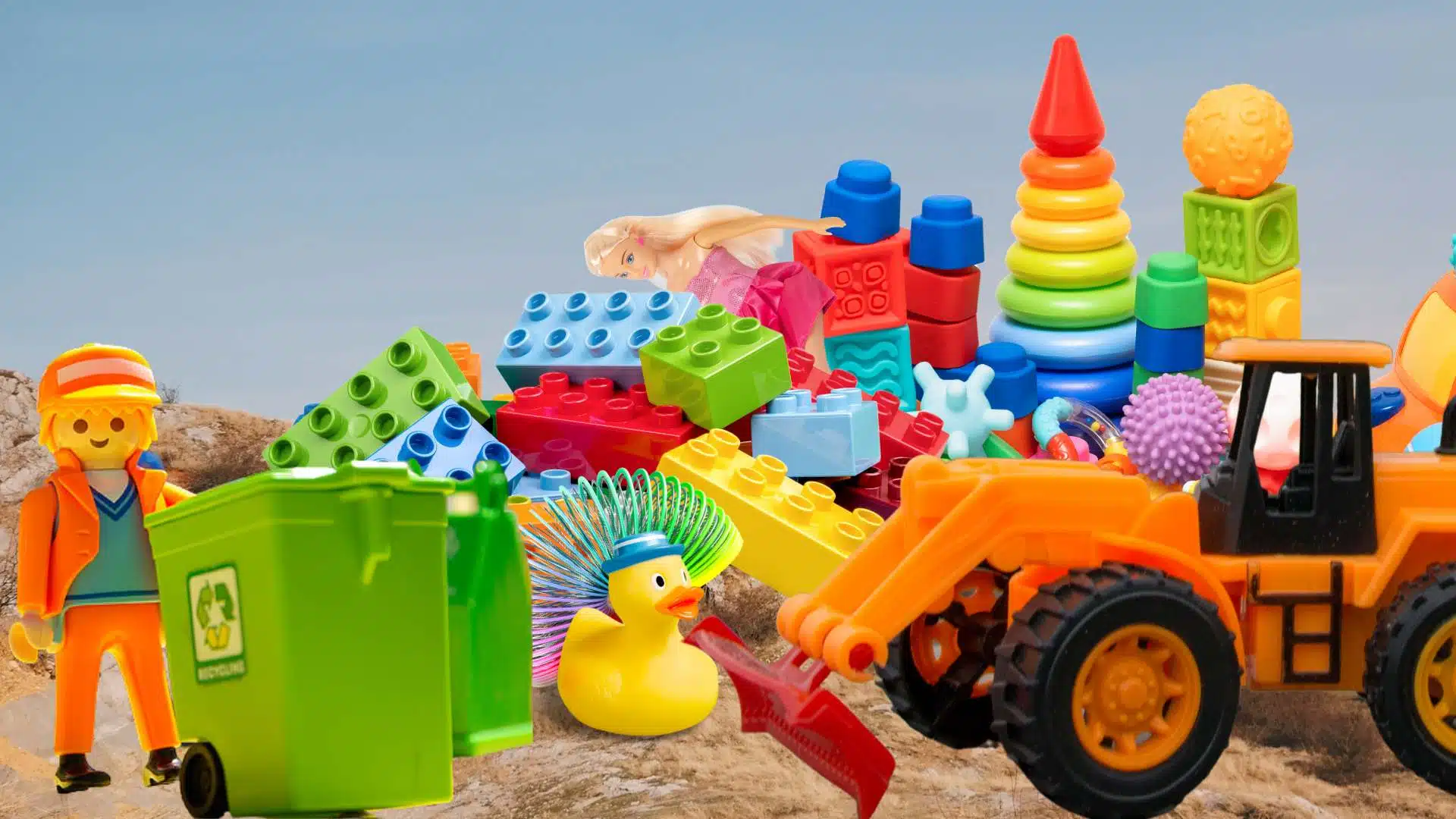
Plastic toys revolutionised the toy industry in the mid-20th century, enabling bright colors, intricate moving parts, and complex molding at accessible price points.
- Versatility and Variety: Plastic can be molded into virtually any shape, allowing for detailed figurines, interlocking bricks, waterproof bath toys, and complex mechanical gears.
- Affordability: Plastic manufacturing makes these toys highly cost-effective, allowing families to acquire diverse play sets on a modest budget.
- Hygiene and Maintenance: High-grade plastic toys are easy to wash, sanitize, and submerge in water, making them ideal for outdoor and bath play.
Drawbacks: Plastic toys are prone to cracking and breaking over time, often ending up in landfills where they take centuries to decompose. Cheaper plastics may also contain harmful chemicals like BPA or phthalates if not sourced from reputable safety-certified manufacturers.
Verdict: Which Material Should You Choose?
For toddlers and foundational play (stacking, shape sorting, imaginative pretend play), wooden toys offer superior sensory, safety, and durability benefits. For outdoor activities, bath time, and complex structural building systems, high-quality BPA-free plastic toys remain practical and valuable components of a play space.
2. Play Design: Open-Ended Toys vs. Closed-Ended Toys
Beyond material, the structure of a toy fundamentally shapes how a child’s brain engages during play. Educational experts categorize toys into two distinct design methodologies: open-ended and closed-ended.
Open-Ended Toys: Fostering Unlimited Creativity
An open-ended toy is any plaything that has no fixed instructions, correct outcome, or predetermined end point. The child decides entirely what the toy becomes based on their imagination at that moment.
Examples include basic building blocks, magnetic tiles, play dough, playsilks, and loose wooden parts.
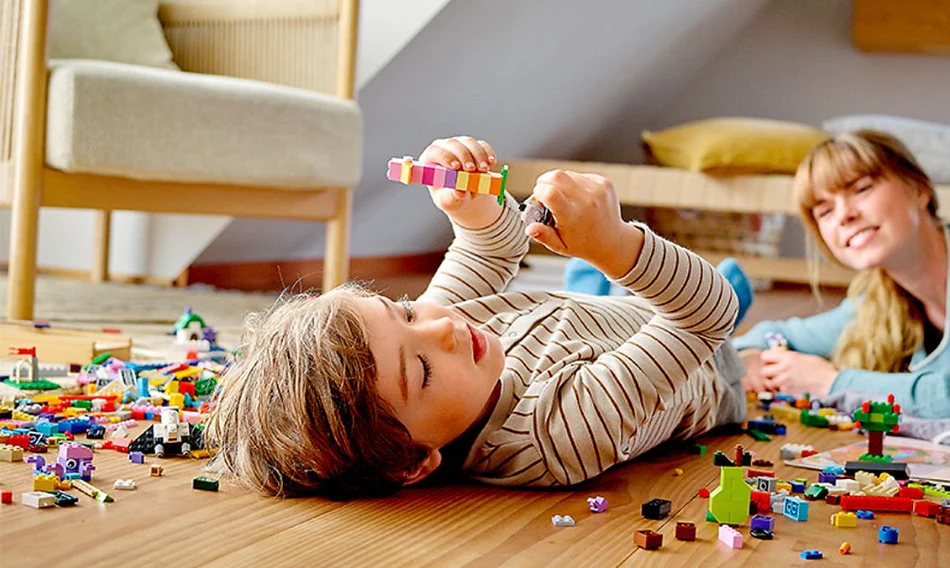
- High Replay Value: A set of wooden building blocks can be a castle today, a futuristic space station tomorrow, and a farm fence next week. The toy evolves alongside the child’s cognitive abilities.
- Encourages Problem-Solving: Without step-by-step instructions, children experiment with trial and error, spatial balance, engineering concepts, and creative critical thinking.
- Supports Emotional Expression: Open-ended pretend play allows children to process real-world experiences, anxieties, and social scenarios through flexible storytelling.
Closed-Ended (Structured) Toys: Building Focus and Mastery
A closed-ended toy has a clear, predefined objective, a specific way to play, and a definitive end point. Once the task is completed, the play cycle reaches a natural conclusion.
Examples include jigsaw puzzles, shape sorters, board games, matching memory cards, and model craft kits with step-by-step assembly instructions.
- Develops Task Completion Skills: Closed-ended toys teach patience, sequence recognition, and the satisfaction of finishing a challenge.
- Enhances Specific Cognitive Skills: Puzzles build spatial perception and pattern recognition, while board games teach rule adherence, turn-taking, and strategic planning.
- Promotes Independent Play: Because the goal is clear, children can self-correct when a puzzle piece doesn't fit, boosting self-reliance and confidence.
Comparison: Open-Ended vs. Closed-Ended Play
Neither category is inherently superior; rather, they serve complementary developmental goals. Open-ended play encourages expansive, out-of-the-box creative thinking, while closed-ended play trains focus, sequence analysis, and task-oriented problem-solving.
A healthy toy collection should maintain roughly a 70/30 split—70% open-ended toys for everyday imaginative exploration and 30% closed-ended activities for focused skill-building and family game nights.
3. Technology Level: Digital Smart Toys vs. Classic Screen-Free Toys
As technology becomes embedded in daily life, the toy industry has evolved to incorporate microchips, augmented reality (AR), smartphone apps, and artificial intelligence into everyday play items. Parents are frequently faced with deciding whether high-tech toys genuinely aid learning or simply add unnecessary screen time.
Digital & Interactive Smart Toys: Future-Ready STEM Learning
Digital toys encompass programmable coding robots, app-connected building sets, interactive learning tablets, and voice-responsive electronic pets. Designed to bridge physical play with virtual interaction, these items target modern STEM (Science, Technology, Engineering, and Math) skills.
- Early Tech Literacy: Coding toys introduce algorithms, sequencing, and logic loops to young learners through intuitive, gamified physical inputs.
- Adaptive Learning: Many smart educational toys adapt their difficulty levels based on the child's age and progress, offering personalized learning tracks in math, reading, and language skills.
- High Immediate Engagement: Lights, responsive sound effects, and dynamic feedback capture attention quickly, making them appealing to reluctant learners.
Drawbacks: Smart toys carry risks of overstimulation, privacy concerns regarding built-in microphones or internet connectivity, and passive "entertainment-style" play where the child simply presses buttons to watch the toy perform.
Classic Screen-Free Toys: Essential Motor & Social Growth
Classic screen-free toys rely entirely on physical manipulation, movement, and imagination. This includes traditional dolls, action figures, mechanical pull-along toys, jump ropes, sports equipment, and simple art supplies.
- Gross & Fine Motor Mastery: Physical play fosters hand-eye coordination, grip strength, balance, and spatial awareness that touchscreens and digital inputs cannot replicate.
- Deep Social Interaction: Screen-free games and imaginative play encourage face-to-face eye contact, verbal negotiation, body language reading, and empathy among peers.
- Zero Digital Fatigue: Screen-free play gives developing eyes and nervous systems a necessary break from blue light exposure and fast-paced visual stimuli.
Finding the Technology Balance
When incorporating tech-based toys into your home, look for products where the digital element enhances—rather than replaces—physical manipulation. Coding robots that require physical block assembly or augmented reality kits that enhance physical drawings are excellent examples of balanced technology integration.
4. Comprehensive Comparison Table
To summarize how these various toy options compare across key buying metrics, review the matrix below:
| Toy Category | Primary Material / Type | Key Developmental Benefits | Longevity & Replay Value | Ideal Age Range |
|---|---|---|---|---|
| Wooden Blocks & Stacking Toys | Natural Hardwood | Fine motor control, balance, spatial reasoning, open-ended imagination. | Very High: Grows with child from toddlerhood through middle childhood. | 6 months – 8 years |
| Plastic Interlocking Bricks | Durable Plastic (ABS) | Spatial engineering, fine motor dexterity, structural problem-solving. | High: Endlessly reconfigurable with expanding accessory sets. | 4 years – Adults |
| Puzzles & Board Games | Cardboard / Wood / Plastic | Logic, focus, task completion, turn-taking, rules comprehension. | Moderate: Replay value drops once a puzzle is mastered; games retain value. | 2 years – All ages |
| Interactive Coding & Smart Toys | Plastic / Electronics | Tech literacy, computational thinking, cause-and-effect sequencing. | Moderate to Low: Dependent on battery life, app updates, and aging hardware. | 5 years – 12 years |
| Pretend Play Sets (Kitchens, Costumes) | Fabric / Wood / Plastic | Social-emotional learning, language building, narrative creativity, empathy. | High: Central to peer and group play throughout early childhood. | 2 years – 7 years |
5. Age-Appropriate Toy Selection Strategy
A toy that is exceptional for a five-year-old can be frustrating or hazardous for an infant. Selecting the right category depends heavily on matching play mechanics to developmental stages.
Infants & Toddlers (0 to 3 Years): Focus on Sensory & Motor Fundamentals
At this early stage, children learn primarily through their senses and physical movement. Toys must be safe for mouthing, free from small parts (choking hazards), and easy to grip.
- Top Picks: Heavy wooden stacking rings, soft fabric activity cubes, simple shape sorters, large rubber sensory balls, and simple push/pull toys.
- Categories to Favor: Natural materials (Wood/Fabric), basic open-ended structures, and screen-free options.
- Avoid: Complex digital toys with loud speakers, small plastic building bricks, or toys with small detachable components.
Preschoolers (3 to 5 Years): The Golden Age of Imagination & Discovery
Preschoolers experience rapid growth in language skills, social interest, fine motor coordination, and imaginative play. They love role-playing, creating stories, and building physical structures.
- Top Picks: Magnetic building tiles, pretend play sets (play kitchens, doctor kits, dress-up clothes), basic wooden train tracks, floor puzzles, and simple cooperative board games.
- Categories to Favor: Open-ended toys, mixed wooden/plastic materials, and beginner closed-ended skill games.
- Avoid: Purely app-based smart toys that limit physical hands-on movement.
School-Age Children (6+ Years): Logic, Engineering, and Social Strategy
Older children possess advanced hand-eye coordination, complex problem-solving abilities, and the capacity for long-term project focus. They thrive on challenges that test their ingenuity, competitive spirit, and technical interests.
- Top Picks: Advanced construction sets, hands-on science experiment kits, programmable robots, complex strategy board games, and outdoor sports gear.
- Categories to Favor: Interactive smart STEM toys, intricate closed-ended challenge kits, and collaborative group games.
6. Key Safety and Quality Standards to Look For
No matter which toy category you choose, safety and manufacturing quality remain non-negotiable. Always inspect packaging and product listings for verified regulatory compliance standards before making a purchase.
- Safety Certifications: Look for recognized regulatory stamps such as ASTM F963 (United States Standard Consumer Safety Specification for Toy Safety), CE mark (European Union standard), or UKCA mark. These ensure the item has undergone rigorous testing for lead, heavy metals, flammability, and mechanical safety.
- Non-Toxic Finishes: For wooden toys, verify that paints and stains are water-based and non-toxic. For plastic products, confirm they are labeled BPA-free, Phthalate-free, and PVC-free.
- Choking Hazard Warning Labels: Ensure products intended for children under 3 years old do not contain small pieces that fit inside a standard small parts tester cylinder (roughly 1.25 inches in diameter).
7. How to Curate the Perfect Playroom Rotation
Rather than cluttering your living space with hundreds of options from every category, adopt a toy rotation system. Toy rotation involves displaying a small, thoughtfully curated selection of items while keeping the remainder stored away in containers, rotating them every few weeks.
An ideal rotated display includes a balanced mix from each comparison category:
- One Building Set: Wooden blocks, interlocking plastic bricks, or magnetic tiles.
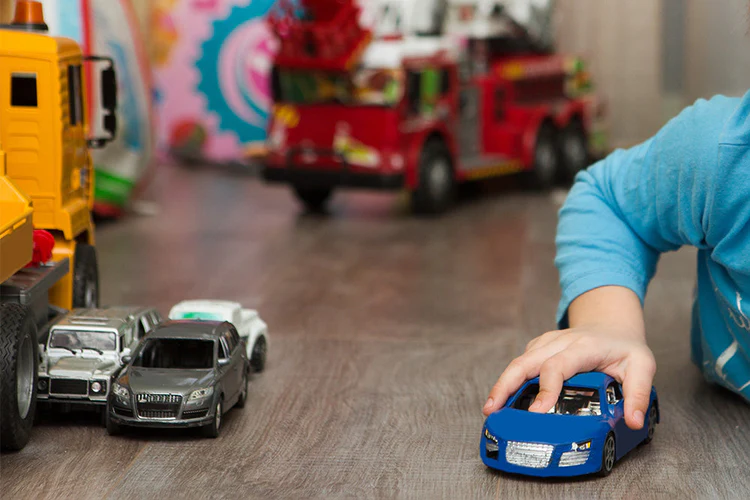
- One Imaginative Set: Play food, figurines, play vehicles, or puppet sets.
- One Focused Challenge: A age-appropriate puzzle, pattern game, or crafting kit.
- One Physical/Sensory Item: Play dough, kinetic sand, or a rhythm music instrument.
- One Book & STEM Activity: A picture book paired with a simple coding robot or discovery toy.
This balanced approach prevents choice overload, reduces playroom clutter, keeps familiar toys feeling fresh and novel, and ensures your child develops a well-rounded skill set across all major developmental domains.
Conclusion: Finding Your Ideal Toy Mix
When comparing toys across materials, play designs, and technology levels, there is no single "perfect" category. Sustainable wooden toys offer unbeatable sensory warmth and durability; modern plastic bricks unlock limitless architectural precision; closed-ended puzzles build focus and problem-solving mastery; and smart tech toys introduce vital future skills when used intentionally.
By assessing your child's age, balancing screen-free imaginative play with focused problem-solving tools, and prioritizing non-toxic safety standards, you can construct an enriching environment where play becomes a powerful engine for lifelong learning and creative discovery.