Free Weights vs. Machines: Which is Better for Your Fitness Goals?
The age-old debate in the fitness world—free weights versus machines—has puzzled beginners and seasoned athletes alike for decades. Walk into any commercial gym, and you will see a clear divide: one side dominated by clanking iron plates, dumbbells, and barbells, and the other lined with sleek, biomechanically engineered cable machines and selectorized equipment. But which one truly deserves your time and effort? The answer is not as simple as choosing one over the other; it depends on your specific training goals, experience level, and physiological needs.
In this comprehensive guide, we will break down the mechanics, benefits, and drawbacks of both training modalities to help you design a workout routine that maximizes your results.
Understanding Free Weights: The Foundation of Functional Strength
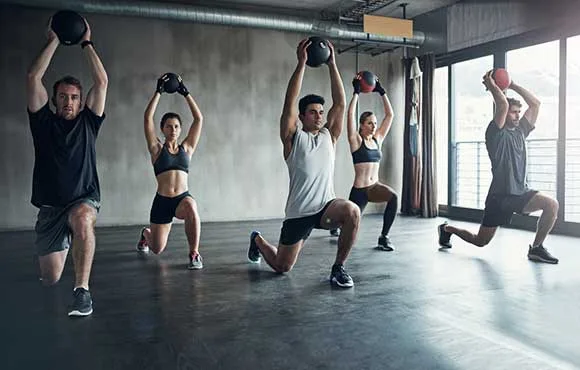
Free weights refer to equipment that is not attached to a machine or a pulley system. This category includes dumbbells, barbells, kettlebells, and medicine balls. The defining characteristic of free weights is that they require the user to manage the weight through a three-dimensional plane of motion, forcing the body to stabilize the load using secondary muscle groups.
The Benefits of Free Weight Training
- Increased Muscle Activation: Because you must stabilize the weight yourself, free weights recruit more stabilizer muscles compared to machines.
- Functional Movement Patterns: Free weights allow for natural, multi-joint movements that mimic real-life activities, such as squatting, lifting, and pushing.
- Versatility: A single pair of dumbbells can be used for hundreds of different exercises, making them perfect for home gyms and limited spaces.
- Better Range of Motion: Machines often lock you into a fixed path. Free weights allow you to adjust your grip and angle to fit your specific anatomy.
The Challenges of Free Weights
The primary drawback of free weights is the steeper learning curve. Proper form is critical to prevent injury, and because there is no mechanical guide, beginners may struggle with balance and coordination. Furthermore, there is a higher risk of dropping weights, which requires a spotter for heavy compound lifts like the bench press or back squat.
Understanding Strength Training Machines: Precision and Isolation
Strength training machines, often called selectorized equipment, use cables, pulleys, and cams to guide the weight through a specific path. These machines are designed to isolate specific muscle groups, making them highly effective for bodybuilding, rehabilitation, or individuals who are new to strength training and lack the coordination for complex lifts.
The Benefits of Machine Training
- Ease of Use: Machines come with instructions and clear paths of motion, making them ideal for beginners who are intimidated by the complexity of free weights.
- Safety: Because the weight is constrained, there is a lower risk of losing control of the load. This makes it safer to train to failure without a spotter.
- Isolation: If your goal is to target a specific muscle (e.g., the quadriceps on a leg extension machine), machines remove the need for stabilization, allowing you to focus entirely on the target muscle.
- Efficiency: Changing the weight on a machine is as simple as moving a pin, which is perfect for high-intensity techniques like drop sets or circuit training.
The Challenges of Machine Training
Machines are designed for the "average" body. If you are exceptionally tall, short, or have unique limb lengths, a machine may force your body into an unnatural position, potentially leading to joint strain. Additionally, because the machine does the stabilizing for you, your "core" and secondary stabilizer muscles are often under-stimulated.
Comparison Table: Free Weights vs. Machines
| Feature | Free Weights | Strength Machines |
|---|---|---|
| Learning Curve | Steep (Requires technique) | Low (Very intuitive) |
| Muscle Recruitment | High (Includes stabilizers) | Moderate (Targeted isolation) |
| Safety | Requires spotter/technique | High (Fixed path) |
| Functional Carryover | High | Low |
| Accessibility | Versatile (Home/Gym) | Limited (Gym only) |
Choosing the Right Approach for Your Fitness Journey
Deciding between these two methods depends largely on where you are in your fitness journey. Most professional trainers advocate for a hybrid approach that leverages the strengths of both.
For Beginners
If you are just starting, machines are an excellent way to build a base level of strength and familiarize yourself with the sensation of muscle contraction. Once you feel confident, transition into compound free-weight movements under the supervision of a coach to ensure your form is safe.
For Bodybuilders and Hypertrophy Seekers
Hypertrophy (muscle growth) is best achieved through a combination. Use free weights for heavy, compound movements like squats and deadlifts to stimulate overall growth, then finish your workout with machine-based isolation movements to exhaust specific muscle groups safely.
For Athletes and Functional Training Enthusiasts
Athletes should prioritize free weights. Sports are rarely performed in a fixed, linear path. By using dumbbells, kettlebells, and barbells, athletes train their bodies to react to dynamic loads, improving balance, coordination, and explosive power.
The Role of Progressive Overload
Regardless of whether you choose free weights or machines, the most important factor in your fitness success is progressive overload. This means gradually increasing the difficulty of your workouts over time—either by adding more weight, performing more repetitions, or reducing rest periods. Without this principle, your muscles will adapt to the current stimulus and stop growing or getting stronger.
Common Fitness Myths Debunked
Myth 1: Machines are "cheating."
This is false. Machines are a tool. If your goal is to isolate a muscle or work around an injury, machines are often the superior choice. Do not let "gym elitism" dictate your training style.
Myth 2: You only need dumbbells to get fit.
While you can achieve an incredible physique with just dumbbells, you may miss out on the specific mechanical advantages of cable machines, which provide constant tension throughout the entire range of motion—something dumbbells cannot do.
Final Thoughts: The Hybrid Advantage
There is no reason to limit yourself to one side of the gym. The most effective fitness programs are those that are well-rounded. By incorporating free weights for functional strength and compound movement, and utilizing machines for safe isolation and volume, you create a balanced training stimulus that promotes both longevity and performance.
Ultimately, the "best" equipment is the one that you enjoy using consistently. Consistency is the primary driver of results. If you feel more motivated using machines, stick with them. If you love the challenge of the barbell, make that your focus. As long as you are challenging your body, focusing on proper nutrition, and allowing for adequate recovery, you will reach your fitness goals.
Take the time to experiment with both. Track your progress, listen to your joints, and adjust your routine as you get stronger. Your fitness journey is a marathon, not a sprint—choose the tools that keep you moving forward safely and effectively.